Sydney & NSW commercial roofing
A leaking metal roof does not always mean the whole roof needs to be replaced. In many cases, a targeted repair can fix the problem and extend the life of the roof.
Practical guidance for property owners, facility managers and strata decision-makers.
But there comes a point where patching stops being practical.
If your roof keeps leaking in different areas, rust is spreading, fixings are failing, or water is getting into the building after every heavy downpour, another small repair may only delay the bigger issue.
For commercial, industrial, strata and residential properties in Sydney, knowing when to replace a metal roof can save money, reduce disruption and prevent ongoing internal damage.
Why Metal Roofs Start Failing
Metal roofing is designed to be strong, durable and low maintenance, but it is not immune to age, weather or poor installation.
Over time, a metal roof can start to break down due to:
- Rust and corrosion
- Loose or deteriorated screws
- Failed washers and fixings
- Damaged flashings
- Poor roof pitch
- Box gutter problems
- Movement in the roof structure
- Storm damage
- Previous poor-quality repairs
- Sheets reaching the end of their service life
In Sydney, metal roofs are exposed to heavy rain, storms, coastal air, heat, humidity and sudden temperature changes. These conditions can slowly weaken the roof system, especially if small issues are ignored for too long.
When Patching Makes Sense
Patching is often the right option when the problem is isolated.
For example, a repair may be enough if there is one damaged sheet, a small section of rust, a loose flashing, a failed penetration seal, or a leak caused by one clear point of entry.
In these situations, a proper repair can be cost-effective and long-lasting.
A good repair should not just cover the leak. It should identify the cause, fix the affected area correctly, and reduce the chance of the same issue coming back.
Patching can make sense when:
- The rest of the roof is in good condition
- Rust is limited to a small area
- Leaks are isolated and easy to trace
- The roof has not had repeated repairs
- The roof structure is sound
- Drainage is working properly
- The roof still has many years of useful life left
The issue is not patching itself. The issue is relying on patches when the roof is already failing as a system.
Signs Your Metal Roof May Need Replacement
A full metal roof replacement becomes worth considering when the roof is no longer reliable, even after repairs.
Here are the key signs.
1. Leaks Keep Coming Back
If the same leak keeps returning after repairs, or new leaks keep appearing in different areas, the problem may be bigger than one failed section.
This often happens when the roof sheets, fixings, flashings or drainage system have aged together.
At that point, patching one section may only expose the next weak point.
For commercial and industrial buildings, recurring leaks can also affect stock, equipment, ceilings, insulation, electrical systems and day-to-day operations. The cost of internal damage can quickly become more expensive than dealing with the roof properly.
2. Rust Is Spreading Across the Roof
Small rust spots can often be treated. Widespread rust is different.
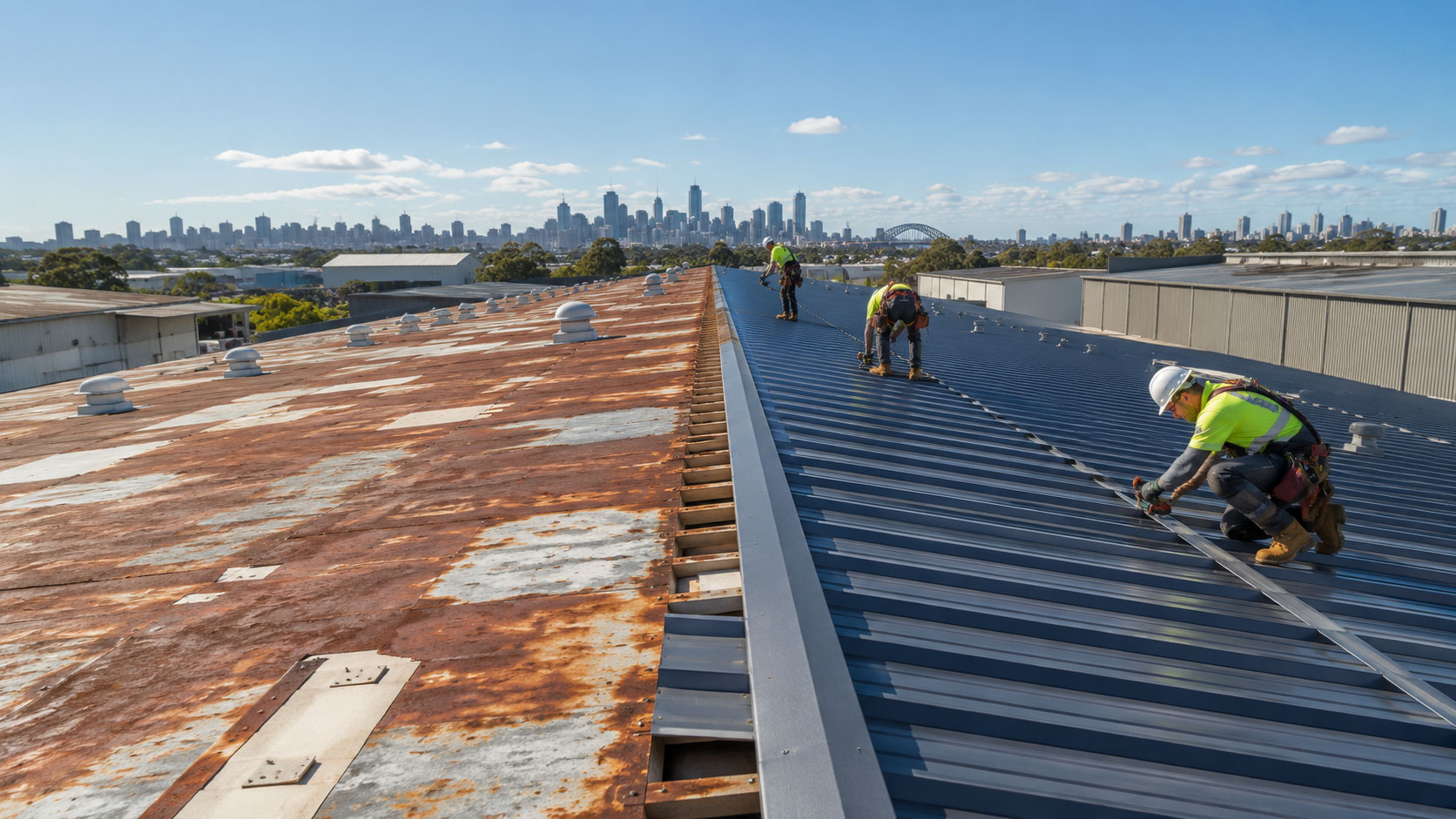
If corrosion has spread across multiple sheets, around fixings, along laps, near gutters, or under old coatings, the roof may be nearing the end of its life.
Rust weakens the metal. Once it has eaten through the sheet or affected multiple areas, patching becomes less reliable.
A roof with widespread corrosion may need replacement because the base material itself is compromised.
3. Screws and Washers Are Failing
Metal roofs rely on fixings to keep sheets secure and watertight.
Over time, screws can loosen, washers can crack, and holes can widen. When that happens across large sections of the roof, water can enter around the fixings.
Replacing a few screws is simple. Replacing thousands of failed fixings across an old roof may not be the best long-term investment, especially if the sheets themselves are also worn, rusted or damaged.
If the fixings are failing everywhere, it is a sign the roof needs a proper assessment.
4. Flashings Have Failed in Multiple Areas
Flashings protect vulnerable parts of the roof, including edges, walls, valleys, penetrations, skylights and changes in roof direction.
When flashings fail, water can enter the building even if the main roof sheets look fine.
One failed flashing can usually be repaired. But if flashings are failing across the roof, it may point to age, poor original installation, movement, or a roof system that was never detailed properly.
In these cases, replacement gives the opportunity to correct the roof design rather than keep patching weak points.
5. The Roof Has Drainage Problems
A metal roof needs water to move away quickly and safely.
If water is ponding, overflowing, backing up through box gutters, or getting trapped around roof penetrations, repeated leaks are likely.
Drainage problems can be caused by:
- Incorrect roof pitch
- Undersized gutters
- Blocked or poorly designed box gutters
- Inadequate downpipes
- Poor falls
- Sagging roof sections
- Previous modifications to the roof
Patching leaks without fixing the drainage issue is usually a short-term fix.
If the roof design is contributing to the problem, replacement or major rectification may be the better option.
6. Previous Repairs Are Everywhere
A roof with several old patches, sealant lines, replacement sections and temporary fixes can become difficult to trust.
Every patch creates another junction. Every junction is another place where water can eventually get in.
This is common on older commercial and strata buildings where different contractors have repaired different sections over many years.
If your roof has become a collection of repairs, it may be time to step back and look at the full system.
7. The Roof Is Affecting the Building Below
A roof replacement should be considered more urgently when leaks are causing damage inside the property.
Warning signs include:
- Water stains on ceilings
- Mould or damp smells
- Damaged insulation
- Electrical issues
- Ceiling sagging
- Water near stock or machinery
- Internal plasterboard damage
- Tenant complaints
- Repeated emergency callouts after rain
For commercial and strata properties, this is especially important. Delaying replacement may create bigger costs, insurance issues, safety concerns and disruption for occupants.
Repair, Restore or Replace?
Not every old metal roof needs immediate replacement. In some cases, restoration may still be suitable.
The right option depends on the condition of the roof.
Repair
A repair is suitable when the issue is isolated and the rest of the roof is still performing well.
This may include replacing a damaged sheet, fixing a flashing, resealing a penetration, treating a small rust area, or replacing a limited number of failed fixings.
Restoration
Restoration may be suitable when the roof is generally sound but needs cleaning, surface preparation, rust treatment, repairs and protective coating.
This can extend the life of the roof when the underlying metal is still in reasonable condition.
Replacement
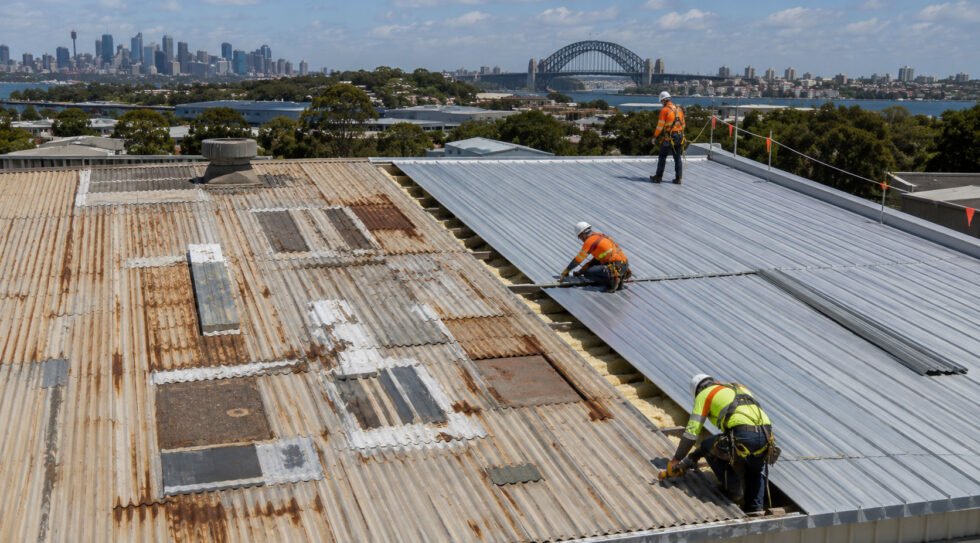
Replacement is usually the better option when the roof has widespread rust, repeated leaks, failing fixings, poor drainage, major sheet deterioration, or too many previous repairs.
A replacement gives you a new roof system rather than another temporary fix.
Why Replacing the Roof Can Be Cheaper Long Term
A metal roof replacement may feel like a larger upfront cost, but repeated patching can become more expensive over time.
You may be paying for:
- Emergency leak callouts
- Temporary repairs
- Internal water damage
- Ceiling repairs
- Mould treatment
- Lost business time
- Tenant complaints
- Insurance excesses
- Ongoing maintenance
- Repeated access equipment
On larger buildings, access alone can be a major cost. If trades need to return again and again, the labour, equipment and disruption add up quickly.
A replacement can be the cleaner financial decision when the roof is clearly at the end of its useful life.
What Happens During a Metal Roof Replacement?
A proper metal roof replacement starts with an inspection.
The roofing team should assess the existing sheets, fixings, flashings, gutters, penetrations, roof pitch, drainage, access and safety requirements.
The replacement process may include:
- Inspecting the existing roof condition
- Identifying leak points and drainage issues
- Planning access and safety controls
- Removing old roofing materials
- Checking the roof structure underneath
- Installing new metal roof sheets
- Replacing flashings and cappings
- Addressing gutters and drainage where needed
- Sealing penetrations correctly
- Completing final checks and clean-up
For commercial and strata properties, staging may be required to reduce disruption to tenants, staff or building operations.
Choosing the Right Metal Roofing Material
Colorbond is a common choice for metal roof replacement in Sydney because it is durable, modern, low maintenance and suited to Australian conditions.
The right profile and material will depend on the property type, roof pitch, exposure, drainage requirements and appearance you want to achieve.
For commercial and industrial properties, performance is usually the priority. For homes and strata buildings, appearance may also play a bigger role.
A roofing contractor should recommend a system that suits the building, not just replace the roof like-for-like if the old design was part of the problem.
Sydney Properties That Often Need Metal Roof Replacement
Metal roof replacement is common across many property types, including:
- Warehouses
- Factories
- Retail centres
- Office buildings
- Apartment blocks
- Strata complexes
- Schools
- Hospitality venues
- Older homes
- Commercial units
- Industrial sheds
Larger roofs often show warning signs gradually. One leak becomes two. Then the roof starts needing repairs every storm season.
That is usually the point where replacement should be seriously considered.
Do Not Wait Until the Roof Fails Completely
The worst time to replace a roof is after major internal damage has already happened.
If the roof is old, leaking repeatedly, rusting in several areas, or costing more each year to maintain, it is worth getting a professional assessment before the next major storm.
A roof replacement can be planned. Emergency damage is harder to control.
Planned replacement also gives you more time to compare options, budget properly, minimise disruption and choose the right materials.
Get Your Metal Roof Assessed
If you are unsure whether your metal roof needs repair, restoration or replacement, the best first step is a roof inspection.
VJ Roofing Services works with residential, commercial and industrial properties across Sydney and NSW, helping property owners identify the most practical way forward.
If patching is still suitable, that may be all you need. But if the roof has reached the point where repairs are no longer worth it, a full replacement may give you a stronger, safer and more reliable result.
Get a clear view of your roof condition
VJ Roofing Services can inspect commercial, industrial and strata roofing across Sydney and explain the practical options for repair, restoration or replacement.