Sydney & NSW commercial roofing
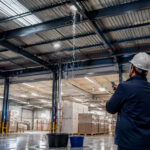
A leaking commercial roof is never just a roofing problem.
Practical guidance for property owners, facility managers and strata decision-makers.
For a business, strata property, warehouse, factory, school, retail site or commercial building, roof issues can quickly affect stock, equipment, tenants, staff safety and day-to-day operations. A small leak may look simple from inside the building, but on a metal roof it can point to a larger issue with roof sheets, flashings, fixings, gutters, stormwater flow or previous repair work.
The real question is not always, “Can this be fixed?”
The better question is:
Should the roof be repaired, restored or replaced?
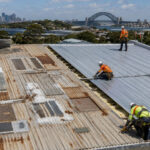
For many commercial properties across Sydney, the right answer depends on the age of the roof, the extent of corrosion, the number of leaks, how the building is used, and whether the existing metal roof still has enough life left in it.
Below is a practical guide to help you understand the difference between commercial roof repairs, roof restoration and full metal roof replacement.
The Difference Between Repair, Restoration and Replacement
Before choosing the right option, it helps to understand what each one actually means.
Commercial Roof Repairs
Roof repairs are targeted works designed to fix specific problems.
This may include:
- Fixing leaks
- Replacing damaged sheets
- Resealing flashings
- Replacing rusted screws or fixings
- Repairing box gutters
- Fixing storm damage
- Sealing roof penetrations
- Addressing localised corrosion
- Repairing skylight leaks
- Fixing ridge capping or flashing issues
A repair is usually the best option when the roof is generally in sound condition and the problem is isolated.
Commercial Roof Restoration
Roof restoration is a larger maintenance process designed to extend the life of an existing roof.
For a metal roof, this can involve:
- Cleaning the roof surface
- Treating rust
- Replacing worn fixings
- Resealing laps and flashings
- Repairing minor damage
- Applying protective coatings where suitable
- Improving the overall weather resistance of the roof
Restoration sits between repair and replacement. It is often suitable when the roof has widespread wear but is not yet at the point where replacement is the smarter long-term option.
Commercial Roof Replacement
Roof replacement means removing the existing roof sheets and installing a new roofing system.
This may be needed when the roof has:
- Widespread rust
- Multiple leak points
- Structural issues
- Failing sheets
- Poor stormwater performance
- Repeated patch repairs
- Old or non-compliant materials
- Major damage from storms or age
Replacement is the biggest investment upfront, but it can be the most cost-effective decision when the current roof is past the point of reliable repair.
When a Commercial Metal Roof Can Be Repaired
A repair may be the right choice when the issue is limited and the rest of the roof is still performing well.
For example, if water is entering around one flashing, one roof penetration or one damaged section, a targeted repair may solve the problem without needing major works.
Common repairable issues include:
- A small number of leaking screws
- Damaged flashing around vents or penetrations
- Isolated rust patches
- Minor storm damage
- A localised leak after heavy rain
- A small section of damaged roof sheeting
- Gutter or downpipe issues causing overflow
The important thing is to identify the actual cause of the leak.
Water can travel under metal roof sheets before appearing inside the building. That means the visible internal leak is not always directly below the roof defect. A proper roof inspection helps avoid guesswork and prevents money being wasted on temporary patching.
For commercial properties, this matters even more because a rushed repair can lead to recurring leaks, tenant complaints and damage to stock, ceilings, insulation or electrical systems.
Signs Your Metal Roof May Need Restoration
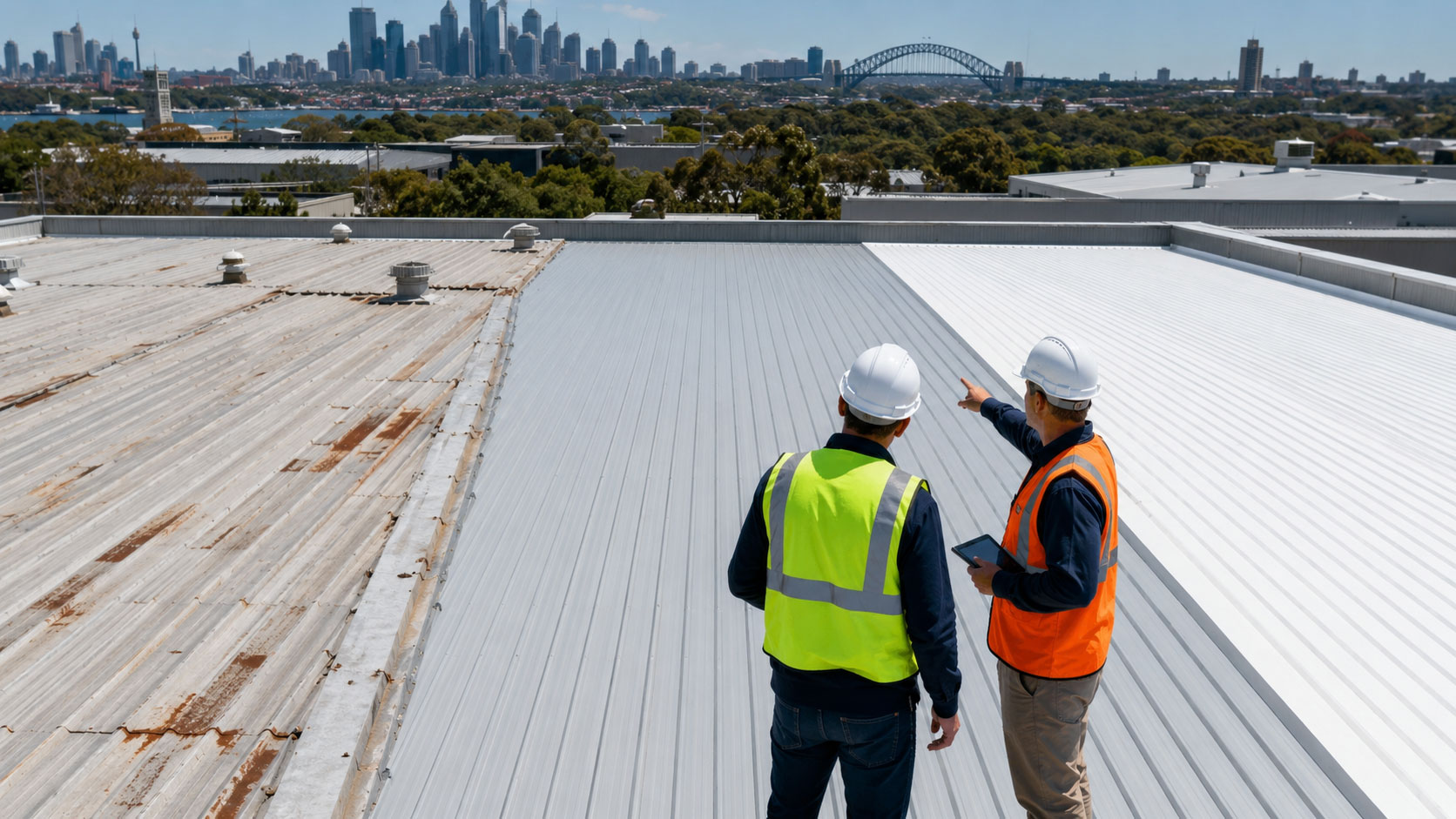
A roof restoration may be worth considering when there are multiple signs of age, but the overall roof structure is still serviceable.
Signs a commercial metal roof may be suitable for restoration include:
- Surface rust starting to appear
- Faded or worn roof coating
- Loose or ageing fixings
- Minor leaks in several areas
- Early corrosion around laps or flashings
- Sealants beginning to fail
- General weathering across the roof
- Gutters and drainage needing attention
Restoration can be a practical option when the roof has not completely failed, but waiting too long could lead to more expensive damage.
For commercial buildings in Sydney, restoration can also help reduce disruption. In many cases, restoration work can be staged so the business, tenants or site operations can continue with less interruption than a full roof replacement.
However, restoration is only worthwhile if the base roof is still sound. If the metal sheets are badly rusted, thin, brittle or failing across large areas, restoration may only delay the inevitable.
When Replacement Is the Smarter Option
Sometimes repairing or restoring a roof is not the best use of money.
A full commercial roof replacement may be the better option when the roof has reached the end of its serviceable life or when repeated repairs are no longer solving the problem.
You may need to replace your metal roof if:
- Leaks keep returning after repairs
- Rust is widespread
- Roof sheets are badly deteriorated
- There are multiple problem areas
- The roof has poor drainage
- Box gutters regularly overflow
- The roof has been patched many times
- Internal damage is becoming more frequent
- The building use has changed
- The roof no longer suits the property’s needs
A common mistake is continuing to pay for small repairs on a roof that really needs replacement.
This can feel cheaper in the short term, but over time the costs add up. Worse, every new leak can create more internal damage, more business disruption and more risk.
If a roof has widespread corrosion or systemic water entry issues, replacement gives the building a fresh start. It also allows the roofing system, flashings, gutters and drainage to be reviewed properly rather than patched around old problems.
The Cost Question: Cheapest Now or Best Long-Term?
Most commercial property owners and managers want to control costs. That is completely understandable.
But with roofing, the cheapest option today is not always the cheapest option over the life of the building.
A repair may be the best value when the problem is small and the roof is otherwise in good condition.
A restoration may be the best value when the roof is ageing but still has a solid base.
A replacement may be the best value when the existing roof is failing and ongoing repairs are becoming frequent.
The decision should not be based only on the immediate quote. It should also consider:
- How often the roof is leaking
- The condition of the roof sheets
- The age of the roofing system
- The cost of internal damage
- The risk to tenants, equipment or stock
- How long you plan to keep the property
- The disruption caused by repeated callouts
- Whether the current roof can handle future weather events
For a commercial site, roof failure can be far more expensive than the roofing work itself. Water damage to stock, machinery, electrical systems, ceilings and fit-outs can quickly turn a roof leak into a major business problem.
Why Metal Roofs Leak
Metal roofs are strong, but they still need proper installation, maintenance and drainage.
Some of the most common causes of metal roof leaks include:
1. Failing Fixings
Over time, screws and washers can loosen, perish or rust. Once the seal around the fixing fails, water can enter through the screw line.
2. Rust and Corrosion
Rust can appear around fixings, sheet laps, gutters, flashings and roof edges. If left untreated, corrosion can spread and weaken the roof.
3. Poor Flashing Details
Flashings protect vulnerable areas such as walls, penetrations, skylights, vents and roof transitions. If flashing is poorly installed or has moved over time, leaks can occur.
4. Blocked or Undersized Gutters
Commercial roofs often move large volumes of water. If gutters, downpipes or box gutters are blocked, damaged or too small, water can back up and enter the building.
5. Previous Patch Repairs
Temporary sealants and patch jobs can fail, especially when they have been used repeatedly instead of addressing the cause of the problem.
6. Storm Damage
Strong wind, heavy rain and fallen branches can damage sheets, flashings, cappings and gutters.
A proper inspection should look at the entire roofing system, not just the spot where water appears inside.
Why Commercial Roof Inspections Matter
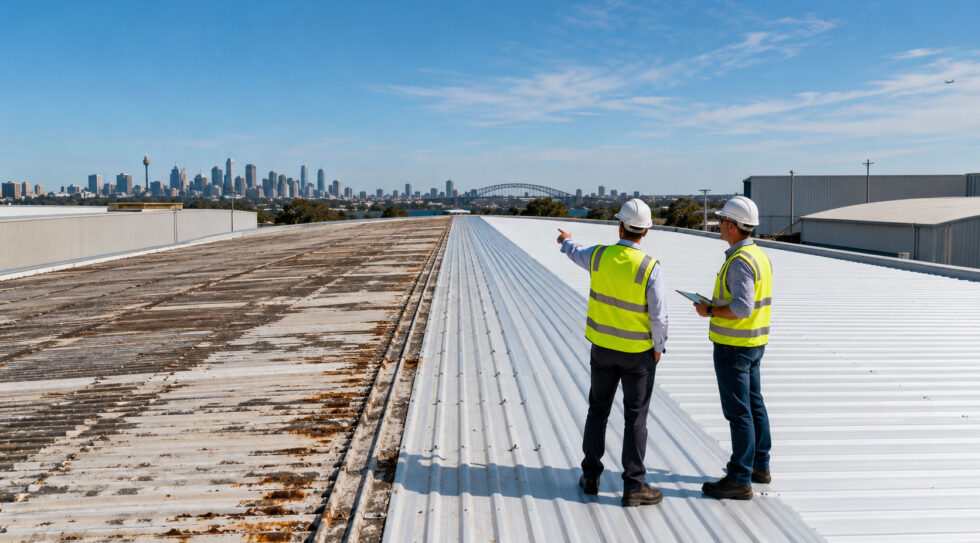
A roof inspection helps identify whether your building needs a repair, restoration or replacement.
For commercial roofs, this is especially important because the roof is often larger, more complex and more difficult to assess from ground level.
A proper inspection may look at:
- Roof sheet condition
- Rust and corrosion
- Fixings and washers
- Flashings and cappings
- Skylights and penetrations
- Gutters and downpipes
- Box gutters
- Stormwater flow
- Safety access
- Previous repairs
- Signs of internal water damage
The goal is to find the cause of the issue and give practical advice.
In some cases, the answer may be a simple repair. In others, it may be more honest to recommend restoration or replacement rather than keep patching a roof that is already failing.
Repair vs Restore vs Replace: A Simple Guide
Repair your commercial roof if:
- The leak is isolated
- The roof is generally in good condition
- Rust is minor and localised
- There are only one or two problem areas
- The issue can be fixed properly without major works
Restore your commercial roof if:
- The roof is weathered but still structurally sound
- There are signs of ageing across the roof
- Fixings, sealants or coatings are wearing out
- Rust is present but manageable
- You want to extend the life of the roof
Replace your commercial roof if:
- Leaks are recurring
- Rust is widespread
- The roof has been repaired many times
- Sheets are badly deteriorated
- Drainage problems are ongoing
- The roof is no longer reliable
- Long-term value matters more than short-term patching
This decision is best made after a site inspection, because two roofs can look similar from the ground but have very different conditions once inspected properly.
Choosing a Commercial Roofing Contractor in Sydney
Commercial roofing is not the same as a small residential repair.
A commercial roofer needs to understand safety, access, scheduling, drainage, business disruption and the long-term performance of the roofing system.
When choosing a contractor, look for a team that can:
- Inspect the full roof system
- Explain the cause of the issue clearly
- Recommend repair, restoration or replacement honestly
- Work safely on commercial sites
- Provide clear quoting
- Handle metal roofing, gutters and flashings
- Plan works around business operations where possible
- Avoid quick patch jobs that do not solve the real problem
The right roofing advice should help you make a confident decision, not pressure you into the biggest job.
Get a clear view of your roof condition
VJ Roofing Services can inspect commercial, industrial and strata roofing across Sydney and explain the practical options for repair, restoration or replacement.