Sydney & NSW commercial roofing
For Sydney property managers, roof maintenance is one of those jobs that is easy to delay until there is a leak, tenant complaint or insurance issue. The problem is that commercial roof problems often start quietly. A blocked box gutter, a few loose fixings, a cracked seal around a penetration or rust around a roof sheet lap can go unnoticed until heavy rain exposes the weakness.
Practical guidance for property owners, facility managers and strata decision-makers.
By the time water enters the building, the cost is rarely limited to the roof. Leaks can damage stock, ceilings, insulation, electrical systems, internal fit-outs and tenant operations. For strata and commercial properties, they can also create urgent committee decisions, insurance questions and disputes about responsibility.
A planned maintenance checklist helps property managers stay ahead of these problems. It gives owners, committees and facility managers a clearer picture of the roof’s condition before minor issues become major works.
Below is a practical commercial roof maintenance checklist for Sydney property managers, with a focus on metal roofs, box gutters and larger commercial buildings.
Why Commercial Roof Maintenance Matters in Sydney
Sydney roofs deal with a mix of harsh UV exposure, coastal air, heavy rain, summer storms, leaf debris and ageing roof plumbing. Commercial roofs are also often more complex than residential roofs. They may include large metal roof areas, internal box gutters, parapet walls, skylights, air conditioning units, vents, access hatches, solar panels and multiple roof penetrations.
This means roof maintenance is not just about checking whether the roof “looks okay” from the ground. A proper inspection should look at water flow, drainage points, sheet condition, fixings, flashing details, penetrations and early signs of corrosion.
For property managers, routine maintenance helps with:
- Reducing emergency callouts
- Preventing avoidable leaks
- Planning repairs before they become urgent
- Supporting insurance records
- Helping committees make informed decisions
- Reducing disruption to tenants and businesses
- Extending the useful life of the roof
A roof does not have to be failing completely to need attention. In many cases, the goal is to identify small defects while repair is still practical.
How Often Should a Commercial Roof Be Checked?
As a general rule, commercial roofs should be inspected at least twice a year, with extra checks after major storms, prolonged rain, strong winds or nearby building works.
For higher-risk properties, inspections may need to be more frequent. This includes buildings with:
- Large box gutters
- Overhanging trees
- Older metal roofing
- Known leak history
- Coastal exposure
- Multiple roof penetrations
- Flat or low-pitch roof areas
- Solar panels or plant equipment on the roof
- Previous patch repairs
For property managers, it is useful to keep roof maintenance aligned with seasonal conditions. A pre-storm-season inspection can help reduce the chance of sudden leaks during heavy rain, while a post-storm inspection can identify damage before the next weather event.
1. Check Roof Access and Safety First
Before any roof inspection, access and safety need to be considered. Commercial roofs can include fragile areas, skylights, steep sections, wet surfaces, exposed edges and trip hazards.
Property managers should confirm:
- Is there safe roof access?
- Are ladders, hatches or access points secure?
- Are there anchor points or fall protection systems where required?
- Are skylights clearly visible and protected?
- Are there signs of unsafe roof sections?
- Are contractors licensed and insured for the work?
- Has the inspection been documented?
A roof should not be accessed casually by tenants, cleaners, handymen or unqualified trades. Many commercial roofs have hidden hazards, especially around old skylights, brittle sheeting and wet metal surfaces.
2. Inspect the Roof Sheets
Metal roof sheets should be checked for early signs of wear, movement or water entry.
Look for:
- Rust or corrosion
- Loose or lifted sheets
- Dents from hail or impact
- Cracked or damaged sheets
- Sheet laps that are opening
- Areas where water appears to pond
- Signs of previous patching
- Mismatched materials
- Paint coating breakdown
- Roof sheets lifting in windy conditions
Small rust spots can sometimes be treated if caught early. However, widespread corrosion, sheet movement or repeated leaks may suggest the roof is approaching the point where larger repairs, restoration or replacement should be considered.
Property managers should also look for patterns. One isolated issue may be a repair job. Repeated defects across the same roof area may suggest a deeper roofing or drainage problem.
3. Check Screws, Fixings and Washers
Fixings are a common source of leaks on metal roofs. Over time, screws can loosen, washers can perish and movement in the roof can create small gaps where water can enter.
The inspection should check for:
- Loose screws
- Missing screws
- Rusted fixings
- Perished rubber washers
- Overdriven screws
- Screws that have backed out
- Fixings near roof penetrations
- Fixings along laps, ridges and flashings
A roof may not need replacement simply because some fixings are failing. In many cases, targeted screw replacement or refixing can stop leaks and extend the life of the roof. But if fixings are failing across large areas, it may point to a broader maintenance issue.
4. Inspect Flashings, Cappings and Aprons
Flashings are designed to keep water out of joints, edges and transitions. On commercial buildings, flashing problems are especially common around parapet walls, roof edges, walls, vents, skylights and service penetrations.
Check for:
- Loose flashings
- Lifted edges
- Cracked sealant
- Rusted flashing sections
- Poor overlaps
- Missing fasteners
- Gaps where water can blow back in
- Signs of movement around joins
- Previous silicone patching
A lot of commercial roof leaks are not caused by the main roof sheet itself. They come from failed flashings, old sealant or poorly detailed junctions. This is why a proper inspection needs to include the roof plumbing details, not just the visible roof surface.
5. Clear and Inspect Box Gutters
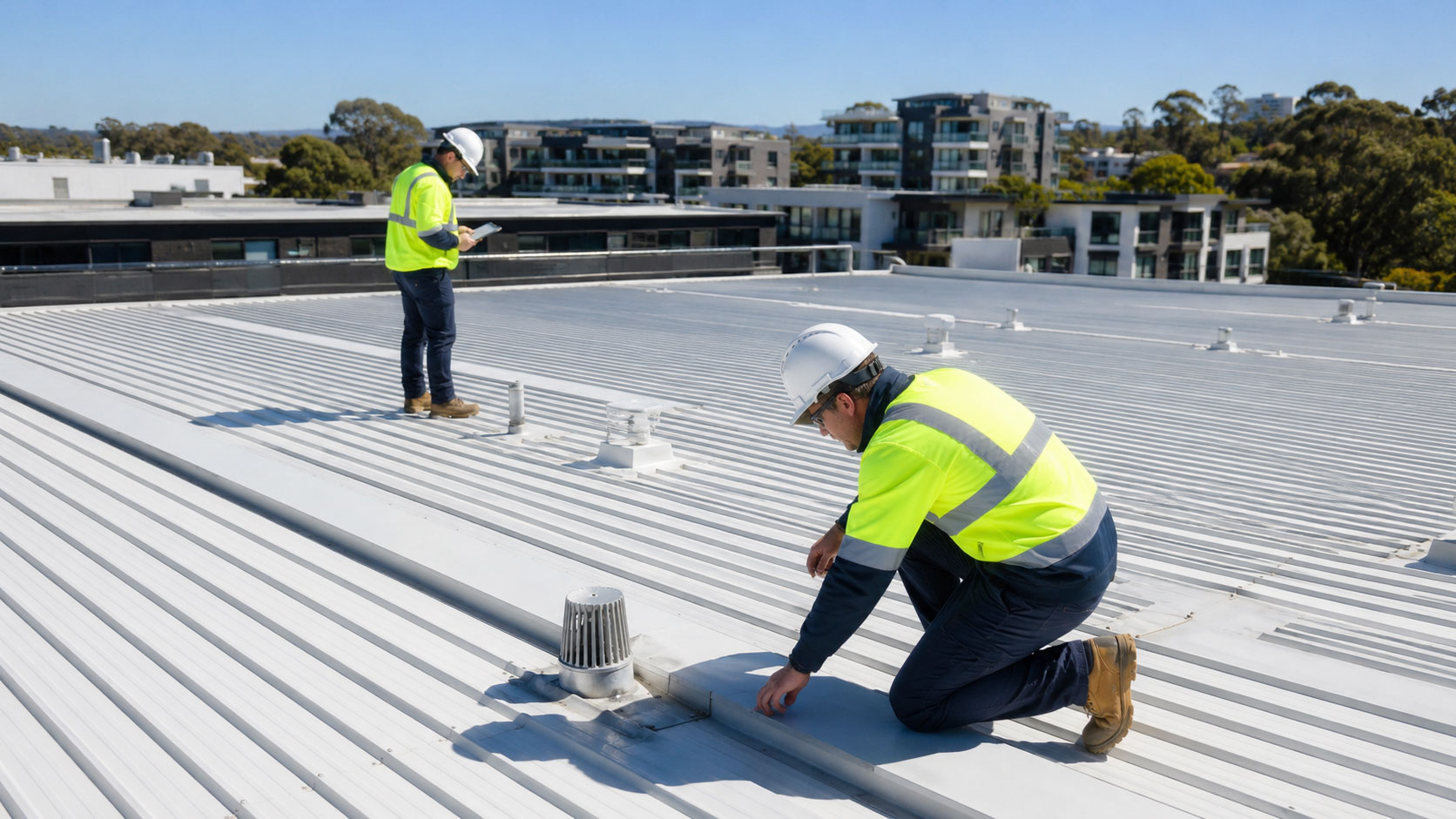
Box gutters are one of the biggest maintenance priorities on commercial roofs. When they work properly, they move large volumes of water away from the roof. When they block, overflow or corrode, water can enter the building quickly.
Property managers should make sure box gutters are checked for:
- Leaves and debris
- Silt build-up
- Rust or corrosion
- Standing water
- Blocked outlets
- Poor falls
- Failed joins
- Cracks or splits
- Overflow capacity
- Signs of water marks near internal walls or ceilings
Box gutters should not be treated as “set and forget”. They need regular cleaning, especially on buildings near trees, industrial debris or bird activity.
A blocked box gutter during heavy Sydney rain can cause internal flooding, even if the roof sheets are otherwise in reasonable condition.
6. Check Downpipes, Outlets and Stormwater Flow
A roof drainage system is only as strong as its weakest point. Even if gutters are clear, water still needs to move freely through outlets, sumps, rainheads, downpipes and stormwater lines.
Check for:
- Blocked outlets
- Crushed or damaged downpipes
- Loose downpipe brackets
- Rusted rainheads
- Overflow staining
- Water discharging in the wrong area
- Evidence of backflow
- Drainage points that cannot handle heavy rain
- Tree roots or stormwater blockages below ground
Property managers should also ask whether water is leaving the building properly. If water is overflowing, backing up or pooling around the property, the problem may not be the roof alone. It may involve the wider drainage system.
7. Inspect Skylights and Roof Penetrations
Commercial roofs often have many penetrations. These can include skylights, vents, exhaust fans, air conditioning units, pipe penetrations, access hatches, flues and solar mounts.
Each penetration is a potential leak point.
Check for:
- Cracked skylights
- Brittle or yellowed skylight sheets
- Loose fasteners around skylights
- Failed seals
- Gaps around pipe penetrations
- Rust around mechanical plant
- Poorly sealed brackets
- Movement around solar mounts
- Deteriorated rubber boots
- Water stains below penetrations
Older skylights deserve special attention. They can become brittle over time and may also create serious safety risks if someone steps on them.
8. Look for Internal Signs of Roof Problems
Some roof issues are easier to detect from inside the building. Internal inspections can help identify leaks before they become obvious during heavy rain.
Check inside the property for:
- Ceiling stains
- Bubbling paint
- Damp smells
- Mould
- Wet insulation
- Water marks on walls
- Stained purlins
- Rust marks on internal steel
- Drips during rain
- Tenant reports of intermittent leaks
Intermittent leaks are important. A leak that only appears during wind-driven rain or heavy storms can still indicate a roofing defect. Property managers should not ignore leaks simply because they stop when the weather clears.
It is also useful to record where the leak appears internally, then compare that location with the roof layout. Water can travel along beams, insulation or ceiling cavities, so the internal drip point is not always directly below the roof defect.
9. Review Previous Repairs and Patch Work
Many commercial roofs have a history of patch repairs. Some are done properly. Others are quick fixes that only last a short time.
During a maintenance inspection, check for:
- Silicone patches
- Tape repairs
- Painted-over rust
- Mismatched sheets
- Temporary flashing work
- Repaired sections that are leaking again
- Areas with multiple previous repairs
- Rust forming around old patches
Repeated patching is often a warning sign. If the same area keeps leaking, the issue may be poor fall, failed drainage, sheet movement or a design problem rather than a small isolated hole.
For property managers, this matters because ongoing patch repairs can become more expensive than planning proper remedial work.
10. Check for Vegetation, Debris and Pest Activity
Commercial roofs can collect more debris than expected. Leaves, branches, plastic, packaging, bird nests and wind-blown material can all block gutters and outlets.
Check for:
- Leaves in gutters
- Branches on roof sheets
- Bird nests near drainage points
- Plant growth in gutters
- Debris around rooftop plant equipment
- Blocked valleys or channels
- Pest damage around openings
Buildings near trees should have a more regular cleaning schedule. A roof that was clean six months ago can become a major leak risk after one windy week if gutters and outlets fill with debris.
11. Inspect Rooftop Plant and Equipment
Air conditioning units, ducts, solar systems and other rooftop equipment can create roof problems if they are not installed or maintained properly.
Check for:
- Equipment sitting directly on roof sheets
- Rust below plant platforms
- Poorly sealed brackets
- Damaged sheets around service areas
- Foot traffic damage
- Unsealed penetrations
- Water ponding around equipment
- Loose conduits or pipes
Property managers should also keep track of who has accessed the roof. Leaks sometimes appear after other trades have worked on air conditioning, solar, signage or electrical systems.
A roof access register can help identify when damage may have occurred.
12. Document Everything with Photos
A roof maintenance checklist is only useful if the findings are documented.
A good roof maintenance report should include:
- Date of inspection
- Weather conditions
- Areas inspected
- Photos of defects
- Photos of completed cleaning
- Notes on urgent issues
- Notes on future risks
- Recommended repair priorities
- Budget guidance where possible
Photos are especially useful for strata committees, building owners and insurers. They also help property managers compare the roof’s condition over time.
For example, a small rust patch may not require urgent replacement today, but if photos show it spreading over multiple inspections, the committee can plan ahead before the roof becomes a larger problem.
13. Prioritise Repairs by Risk
Not every roof defect has the same urgency. Property managers should separate findings into practical categories.
Urgent issues
These may include active leaks, blocked box gutters, unsafe roof areas, storm damage, loose sheets, failed flashings or anything that may cause immediate water entry.
Short-term repairs
These may include localised rust treatment, fixing loose screws, resealing penetrations, replacing damaged flashing sections or clearing drainage issues before the next major rain event.
Planned maintenance
These may include larger gutter repairs, roof coating, staged sheet replacement, access improvements or longer-term roof replacement planning.
This makes it easier for owners and committees to approve work in stages instead of reacting under pressure during an emergency.
14. Know When Maintenance Is No Longer Enough
Maintenance is important, but it cannot fix every commercial roof indefinitely.
A roof may need more than maintenance if there is:
- Widespread corrosion
- Repeated leaks across multiple areas
- Major box gutter failure
- Poor roof fall
- Extensive failed fixings
- Large areas of damaged sheeting
- Ongoing internal water damage
- Repeated emergency callouts
- Safety concerns with access or brittle materials
At this stage, property managers may need advice on whether the roof should be repaired, restored or replaced. The right option depends on the roof’s age, condition, drainage design, budget, tenant needs and how long the owner plans to hold the property.
Suggested Commercial Roof Maintenance Schedule
For most Sydney commercial properties, a practical schedule may look like this:
Quarterly
- Clear visible debris from gutters and outlets
- Check box gutters where access is available
- Review tenant leak reports
- Check stormwater discharge points
- Inspect known problem areas
Every six months
- Full roof inspection
- Check fixings, flashings and penetrations
- Inspect skylights
- Review internal signs of moisture
- Photograph defects
- Update maintenance records
After major storms
- Check for loose sheets or flashings
- Clear blocked gutters and outlets
- Inspect for new leaks
- Check internal ceilings and walls
- Record tenant reports
- Arrange urgent repairs where required
Annually
- Review roof condition report
- Prepare budget recommendations
- Identify larger works required in the next 12–24 months
- Review safety access
- Assess whether ongoing patching is still cost-effective
Final Checklist for Property Managers
Here is a simple checklist property managers can use when reviewing a commercial roof:
- Roof access is safe and suitable
- Roof sheets are checked for rust, damage and movement
- Screws, fixings and washers are inspected
- Flashings and cappings are secure
- Box gutters are clean and draining properly
- Downpipes and outlets are clear
- Skylights are checked for cracks and brittleness
- Roof penetrations are sealed correctly
- Rooftop equipment is not damaging the roof
- Internal ceilings and walls are checked for water marks
- Previous patch repairs are reviewed
- Debris and vegetation are removed
- Photos are taken
- Urgent repairs are identified
- Future maintenance is recorded
- Owners or committees receive clear recommendations
Get a clear view of your roof condition
VJ Roofing Services can inspect commercial, industrial and strata roofing across Sydney and explain the practical options for repair, restoration or replacement.