Sydney & NSW commercial roofing
A leaking warehouse roof is more than an inconvenience. It can damage stock, interrupt operations, create safety issues and lead to expensive structural problems if it is not dealt with early.
Practical guidance for property owners, facility managers and strata decision-makers.
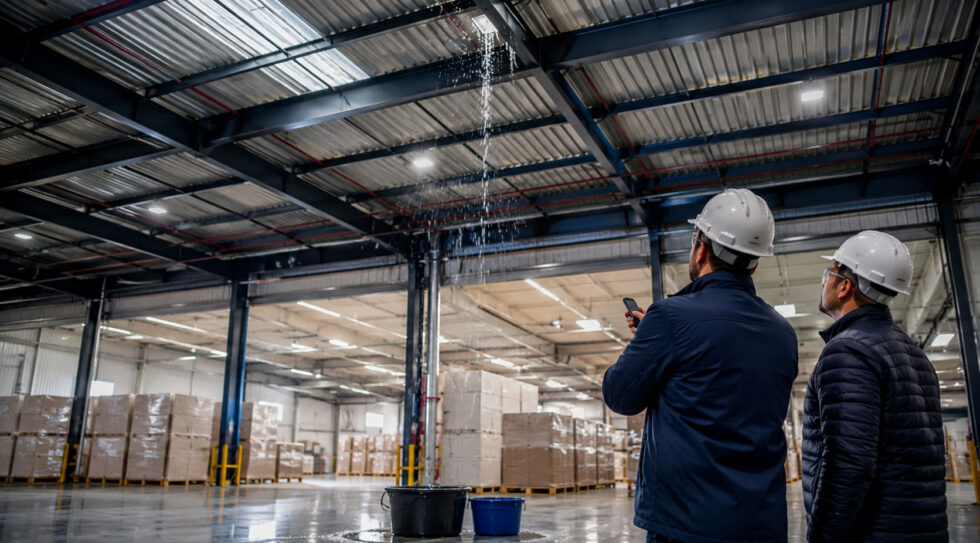
Unlike a small residential leak, a warehouse roof leak can affect a much larger area before anyone notices it. Water may travel along roof sheets, purlins, insulation, ceiling linings or internal beams before it finally appears inside the building. By the time there is visible dripping, staining or water on the floor, the original entry point may already have been leaking for some time.
For warehouse owners, facility managers and commercial tenants, the key is to understand what usually causes these leaks and what repair options are available before the issue becomes more expensive.
Why Warehouse Roof Leaks Need Fast Attention
Warehouses are built for function. They often have large metal roof areas, box gutters, long roof runs, skylights, vents, penetrations, plant equipment and drainage systems that need to handle heavy rain quickly.
When one part of that system fails, water can enter the building and affect:
- stored goods and inventory
- machinery and equipment
- electrical systems
- insulation
- office areas inside the warehouse
- ceiling linings
- structural steel
- pedestrian safety
- tenant or insurance obligations
Even a small leak can become a recurring problem if only the visible symptom is patched. The real cause needs to be found and repaired properly.
Common Causes of Warehouse Roof Leaks
1. Blocked Box Gutters
Box gutters are one of the most common leak points in commercial and industrial buildings.
Many warehouses rely on internal box gutters to move large volumes of water away from the roof. When they become blocked with leaves, debris, sludge, old sealant, packaging material or built-up dirt, water can back up and overflow into the building.
This can happen during heavy rain when the gutter simply cannot drain fast enough. In some cases, the gutter may also be undersized for the roof area or may not have enough overflow capacity.
Warning signs include water staining near internal walls, leaks during storms, overflowing gutters, or water entering around the same area whenever there is heavy rain.
2. Failed Roof Flashings
Flashings are used to seal roof edges, joins, walls, skylights, vents, penetrations and changes in roof direction.
On warehouse roofs, flashings are exposed to strong sun, wind, rain and movement from thermal expansion. Over time, they can lift, crack, corrode or pull away from the surface they are meant to protect.
Once flashing fails, water can enter under the roof sheets or around penetrations. This is especially common around parapet walls, roof-to-wall junctions, vents, exhaust systems and areas where previous repairs have been carried out poorly.
3. Loose or Rusted Roof Screws
Metal warehouse roofs are usually fixed with screws and washers. These fixings are small, but they play a major role in keeping the roof watertight.
Over time, screws can loosen due to movement, wind uplift or age. Rubber washers can also perish, crack or shrink. Once this happens, water can enter through the screw holes.
This type of leak can be difficult to spot from inside because water may run along the underside of the roof sheet before dripping somewhere else.
In many cases, replacing old or failed fixings is a practical repair option, especially if the roof sheets are still in reasonable condition.
4. Corroded Metal Roof Sheets
Warehouses often have metal roofing because it is durable, practical and suitable for large roof areas. However, metal roofs can still corrode over time.
Rust may develop around fixings, laps, gutters, flashings, roof penetrations or areas where water sits for too long. Once corrosion creates small holes or weak points, water can enter during rain.
Surface rust may be repairable if caught early. More serious corrosion may require sheet replacement, section repairs or a larger roof restoration plan.
5. Poor Roof Pitch or Ponding Water
Warehouse roofs need enough fall to move water into the drainage system. If the roof has poor pitch, sagging areas or sections where water ponds, leaks become more likely.
Ponding water puts extra pressure on laps, fixings, seams and flashings. It also speeds up corrosion and can expose weaknesses that would not leak under normal rain conditions.
This issue is common on older warehouses, extensions, poorly designed roof sections or roofs that have moved over time.
6. Damaged Skylights
Many warehouses use skylights or translucent roof sheets to bring natural light into the building. These can become brittle, cracked, loose or poorly sealed as they age.
Leaks around skylights can be caused by failed seals, cracked sheets, movement around fixings or poor flashing details.
Skylights also create a safety concern during inspections and repairs, as old or brittle skylight panels may not be trafficable. They should always be assessed by experienced roofers with proper safety systems in place.
7. Roof Penetrations and Mechanical Equipment
Warehouses often have vents, exhaust fans, air conditioning units, ducts, pipe penetrations and other roof-mounted equipment.
Every roof penetration is a potential leak point if it is not sealed and flashed correctly. Problems can occur when equipment is installed after the original roof, especially if the work was done by a trade that did not properly reinstate the roofing system.
Leaks around mechanical penetrations can also appear after vibration, movement, failed sealant or poor maintenance.
8. Poor Previous Repairs
Not all roof repairs solve the problem properly. Some only cover the leak temporarily.
Common examples include excessive silicone, patching over rust, sealing without addressing drainage, or fixing the wrong area because the water entry point was not properly traced.
These repairs may work for a short time, but they often fail again during heavy rain. A proper commercial roof inspection should identify both the visible damage and the underlying cause.
9. Storm, Hail or Wind Damage
Storms can create sudden warehouse roof leaks. Strong wind may lift flashings, loosen sheets or force rain under laps. Hail can damage skylights, dent metal roofing or weaken roof coatings.
After a major storm, leaks may appear in several areas at once. It is important to inspect the roof safely and document the damage, especially if an insurance claim may be involved.
10. Ageing Roof Coatings or Membranes
Some commercial roofs have protective coatings or membrane systems. These can deteriorate over time due to UV exposure, movement, foot traffic and weather.
Once coatings break down, the roof surface can become more vulnerable to corrosion, cracking and water entry. Depending on the condition of the roof, recoating or restoration may be an option.
How to Find the Source of a Warehouse Roof Leak
Finding a warehouse roof leak is not always straightforward.
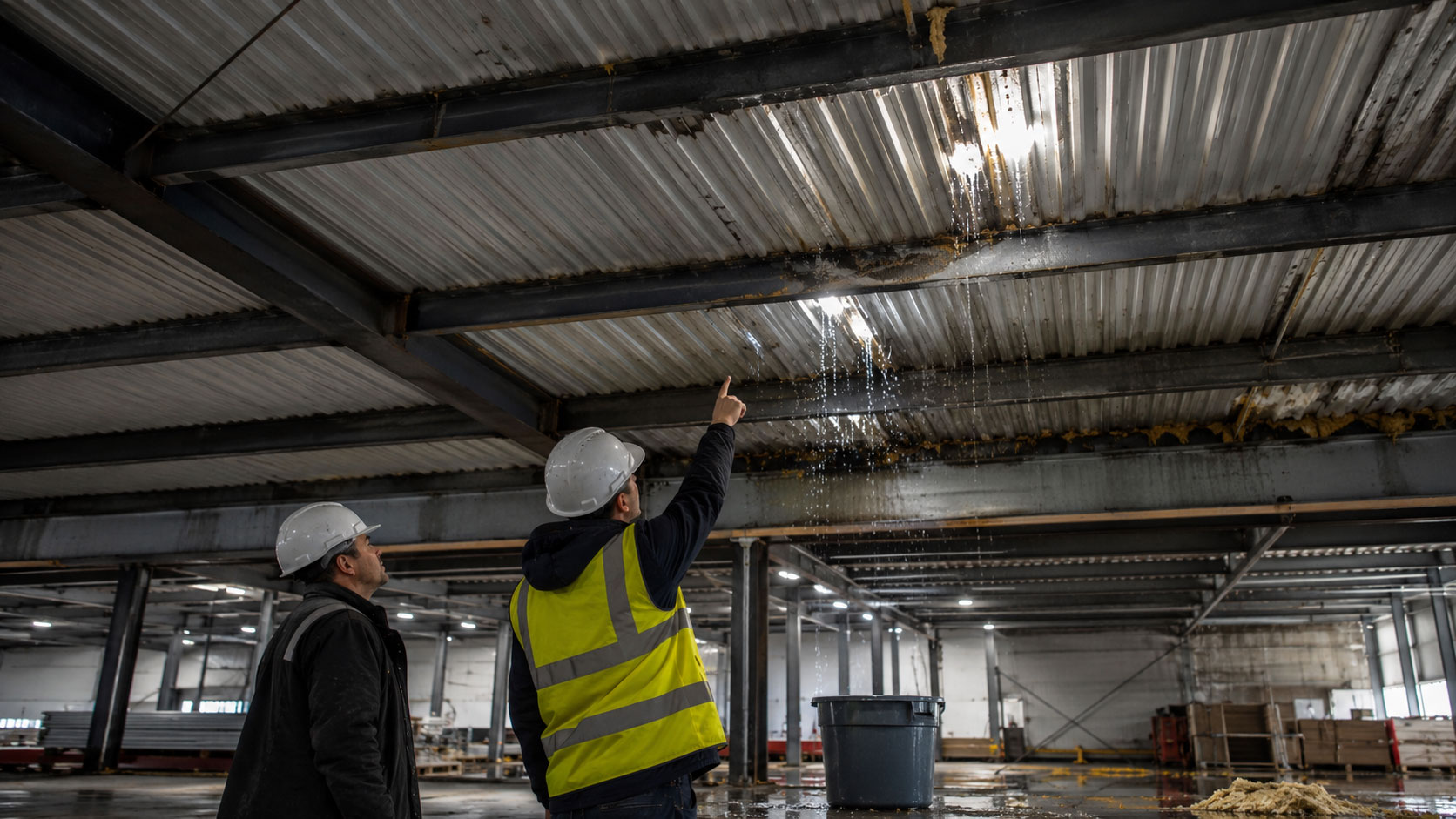
The place where water appears inside the building is not always directly below the entry point. Water can travel along steel beams, roof sheets, insulation, internal framing or cable trays before dripping into the warehouse.
A proper leak inspection may include:
- checking gutters and downpipes
- inspecting roof sheets and fixings
- checking flashings and roof penetrations
- assessing skylights
- looking for rust or ponding water
- reviewing previous repair areas
- checking internal water paths
- taking photos for reporting
- testing likely leak areas where appropriate
For commercial and industrial buildings, a written inspection report can also help owners, tenants, strata managers or facility managers make clear repair decisions.
Warehouse Roof Repair Options
The right repair depends on the cause of the leak, the condition of the roof and whether the issue is isolated or part of a larger roof problem.
Targeted Leak Repairs
If the roof is generally in good condition and the leak has a clear cause, targeted repairs may be enough.
This may include replacing damaged flashings, sealing a penetration correctly, replacing failed fixings, repairing a small rusted section or clearing a blocked drainage point.
Targeted repairs are usually best when the issue is localised and the rest of the roofing system is still sound.
Gutter and Downpipe Repairs
If the leak is caused by poor drainage, the repair may need to focus on the gutter system.
This can include cleaning blocked gutters, repairing box gutters, improving outlets, replacing damaged sections, installing overflows or upgrading downpipes.
For warehouses, drainage capacity is critical. If the gutter system cannot handle heavy rain, patching the roof surface alone will not solve the problem.
Flashing Replacement
Failed flashings should usually be repaired or replaced properly rather than covered with more sealant.
This may involve removing the damaged flashing, preparing the area, installing new flashing and ensuring it is correctly fixed and sealed.
Good flashing work is especially important around walls, parapets, skylights, penetrations and changes in roof direction.
Roof Screw Replacement
Where roof fixings have failed, screw replacement may be an effective repair.
This involves removing old or loose screws and replacing them with suitable new fixings and washers. In some cases, oversized screws may be needed where holes have enlarged.
This can help restore the roof’s watertightness without replacing the entire roof, provided the metal sheets are still in good condition.
Sheet Replacement
If individual roof sheets are badly rusted, cracked, damaged or beyond repair, replacing those sections may be the best option.
This can be a practical approach when the damage is limited to one area, such as a roof valley, gutter edge, skylight section or storm-damaged sheet.
Roof Restoration
If the warehouse roof has widespread wear but is still structurally suitable, roof restoration may be worth considering.
A commercial roof restoration may include cleaning, rust treatment, fixing replacement, flashing repairs, sealing, surface preparation and protective coating.
Restoration can extend the life of the roof and improve weather protection without the cost of a full replacement, but it is only suitable when the existing roof is still in repairable condition.
Roof Replacement
If the roof is badly corroded, poorly designed, repeatedly leaking or near the end of its service life, replacement may be the smarter long-term option.
A full replacement may cost more upfront, but it can reduce ongoing repair costs, improve drainage, increase compliance and provide a more reliable roofing system for the building.
This is often considered when leaks are recurring across multiple areas or when repairs are becoming frequent and reactive.
Repair, Restore or Replace?
The decision usually comes down to three questions:
- Is the leak isolated or part of a larger roof problem?
- Is the roof still in good enough condition to repair or restore?
- Will another patch actually solve the issue long-term?
If the roof has one clear problem, a targeted repair may be enough. If the roof has multiple small issues, restoration may be more cost-effective. If the roof has widespread corrosion, poor drainage or repeated leaks, replacement may be the better investment.
A professional inspection can help you avoid spending money on short-term repairs that do not fix the underlying cause.
What Warehouse Managers Should Do When a Leak Appears
If you notice water entering your warehouse, take action quickly.
Move stock, equipment and electrical items away from the affected area where safe to do so. Mark the location of the leak internally and take photos of the water entry, damaged goods, stains or affected areas.
Avoid sending staff onto the roof. Warehouse roofs can be dangerous, especially around skylights, wet metal sheets and fragile sections.
The next step is to arrange a proper roof inspection so the cause can be identified and repaired safely.
Preventing Future Warehouse Roof Leaks
The best way to reduce warehouse roof leaks is through regular maintenance.
A maintenance plan may include:
- scheduled gutter cleaning
- roof inspections before and after storm season
- checking fixings and flashings
- removing debris from roof areas
- inspecting skylights and penetrations
- identifying early rust
- documenting roof condition with photos
- repairing small issues before they spread
For large commercial and industrial roofs, preventative maintenance is usually much cheaper than emergency repairs, damaged stock or business interruption.
Get a clear view of your roof condition
VJ Roofing Services can inspect commercial, industrial and strata roofing across Sydney and explain the practical options for repair, restoration or replacement.