
Sydney & NSW commercial roofing
Box gutters are common on commercial and industrial buildings across Sydney, especially warehouses, factories, strata buildings, shopping strips, schools and older metal roof systems.
Practical guidance for property owners, facility managers and strata decision-makers.
When they are working properly, you barely notice them. They collect large volumes of roof water and move it away through outlets, sumps and downpipes.
When they fail, the damage can be expensive.
A leaking box gutter can cause water to enter ceilings, offices, stock areas, electrical zones, insulation, wall cavities and structural sections of the building. In many cases, the leak only shows up during heavy rain, which makes it harder to diagnose without a proper roof inspection.
Below are the most common box gutter problems in commercial buildings, why they happen, and what you can do before the damage gets worse.
What is a box gutter?
A box gutter is a concealed or semi-concealed gutter system, usually installed between two roof sections or between a roof and a parapet wall.
Unlike standard external gutters, box gutters are often built into the roof structure. That means when they overflow or leak, water may not spill harmlessly over the outside edge. Instead, it can back up into the roof cavity or enter the building.
This is why box gutter problems need to be taken seriously, especially on commercial roofs with large catchment areas.
Why box gutters leak
1. Blocked outlets and downpipes
One of the most common causes of box gutter leaks is blocked drainage.
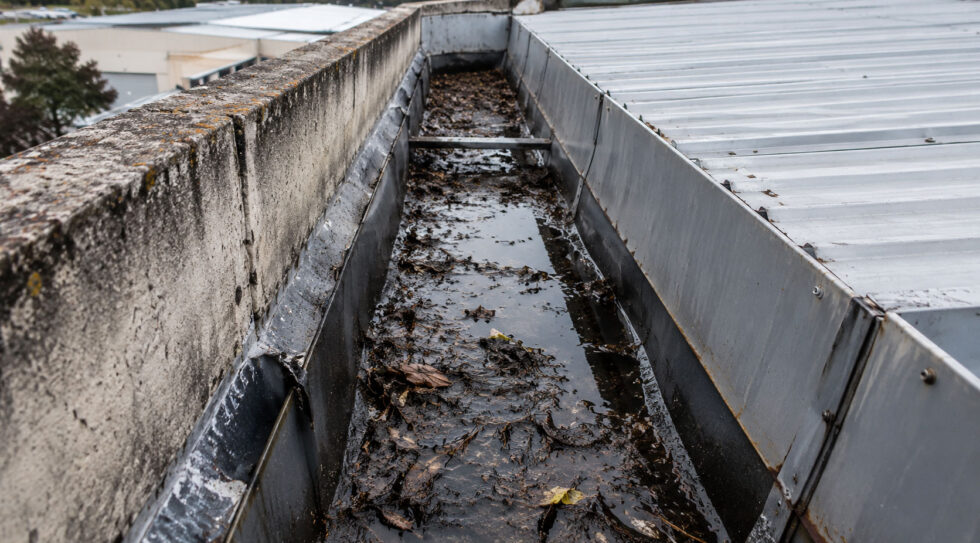
Leaves, dirt, screws, old sealant, plastic, bird debris and roof sediment can build up around outlets and sumps. Once the outlet is restricted, water has nowhere to go fast enough during heavy rain.
The box gutter then fills, backs up and overflows into the roof space.
This is especially common on commercial buildings near trees, buildings with poor maintenance access, or roofs that have not been cleaned in a long time.
2. Incorrect fall
Box gutters need the right fall so water moves towards the outlet.
If the gutter is too flat, water sits inside it after rain. Over time, this creates ponding, corrosion, sludge build-up and premature failure.
A small fall issue may not look serious on a dry day, but during a storm it can be the difference between water draining properly and water entering the building.
3. Rust and corrosion
Many commercial box gutters are made from metal. Once protective coatings break down, corrosion can start around joins, low points, outlets and areas where water sits.
Rust often begins as a small issue, but once pinholes or weak sections form, leaks can spread quickly.
Corrosion is also common where incompatible metals have been used together, or where old fixings, debris or roof contaminants are sitting inside the gutter.
4. Failed joints and sealant
Box gutters often leak at joints, laps, corners, outlets and stop ends.
Over time, sealants dry out, crack, separate or fail due to movement in the roof. Commercial buildings expand and contract with heat, wind and weather, and this movement can open up weak points.
A quick patch may stop water for a short period, but if the joint has failed because of movement, poor design or corrosion, the leak will usually come back.
5. Undersized gutters
Some box gutters are simply too small for the roof area they are trying to drain.
This can happen on older buildings, buildings that have been extended, or roofs where the drainage system was never designed properly in the first place.
If the gutter cannot handle heavy rainfall, water can overflow even when the gutter is clean.
This is a major concern for commercial buildings because large roof areas can collect a huge amount of water very quickly.
6. Poor overflow provision
A well-designed box gutter system should have a safe overflow path.
If the primary outlet blocks or the rain is heavier than the system can handle, overflow should discharge outside the building, not into the ceiling.
Many leaking commercial roofs have no effective overflow system, or the overflow is too small, too high, blocked or incorrectly positioned.
This is one of the biggest reasons a blocked box gutter becomes an internal leak.
7. Poor previous repairs
It is common to find layers of silicone, patching tape, coatings or sheet metal repairs on old commercial box gutters.
Some repairs may buy time, but many hide the real issue.
If water is ponding, the gutter is rusted, the outlet is too small, or the gutter has been poorly installed, surface patching will not solve the problem properly.
The longer this continues, the more expensive the final repair can become.
Signs your commercial box gutter has a problem
You may have a box gutter issue if you notice:
- Water stains on ceilings or walls after heavy rain
- Drips inside the building during storms
- Overflowing gutters or water spilling behind fascias
- Rust stains on metal roofing or walls
- Mould, damp smells or swollen ceiling tiles
- Water pooling inside the gutter after rain
- Repeated leaks in the same area
- Electrical issues near roof leak areas
- Visible rust, splits or failed sealant around the gutter
The important thing is not to assume the visible leak is directly below the problem. Water can travel along purlins, insulation, roof sheets and internal framing before it appears inside.
What to do if your box gutter is leaking
Step 1: Do not rely on another patch
If the leak has happened more than once, there is usually an underlying issue.
Patching the visible hole may not fix the drainage problem, fall issue, overflow problem or corrosion that caused the leak.
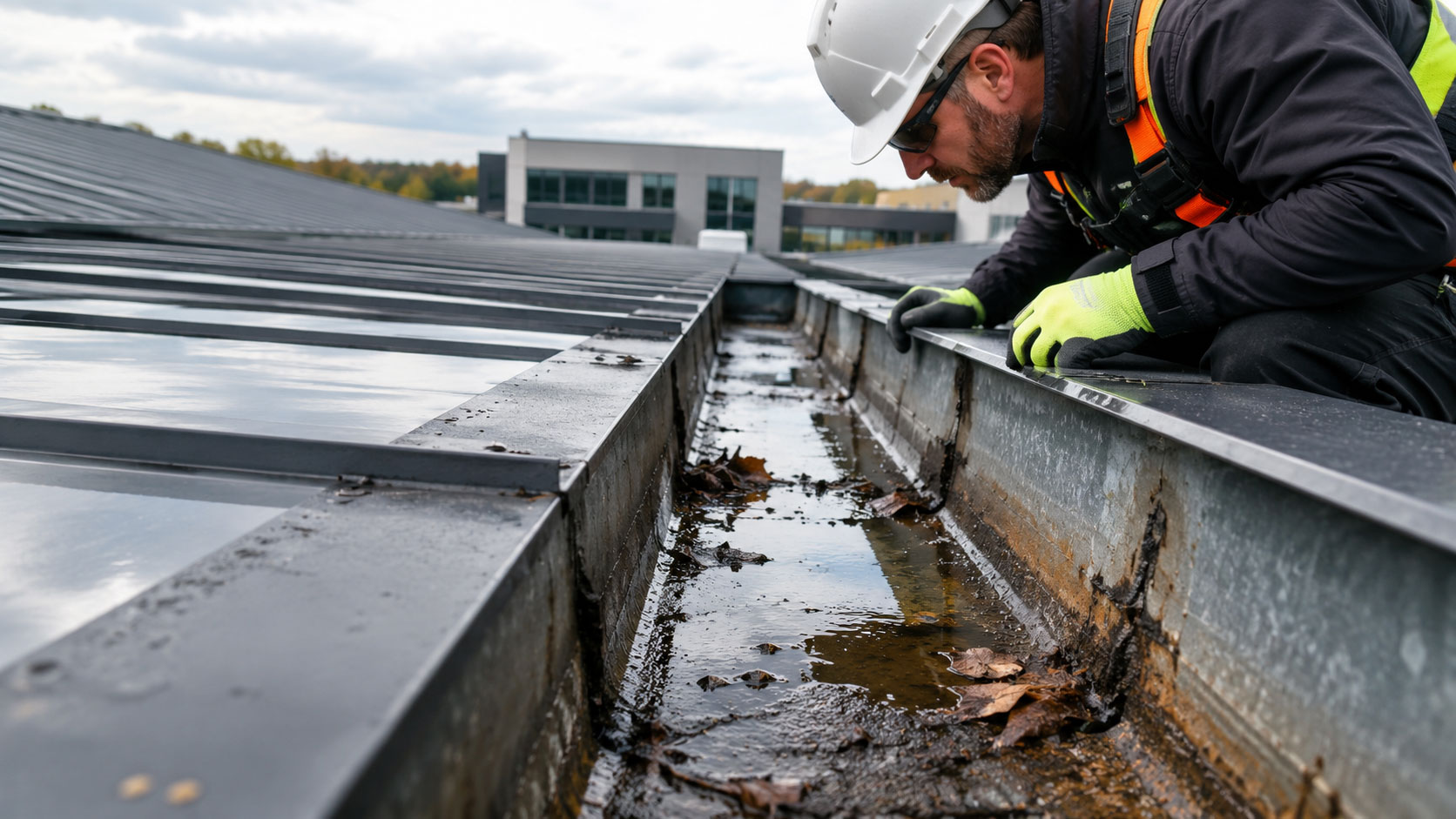
A proper inspection should look at the entire gutter system, including the roof sheets, flashings, outlets, downpipes, sumps and overflow points.
Step 2: Check for blockages and ponding
The first thing to assess is whether water is draining properly.
A blocked outlet or downpipe may be simple to clear, but if the gutter is full of sludge or holding water after rain, it may need more than cleaning.
Standing water is a warning sign. Box gutters are not designed to act like storage tanks.
Step 3: Inspect the gutter condition
A commercial roofing contractor should check for rust, pinholes, failed joins, loose fixings, cracked sealant, damaged flashing and weak sections.
In some cases, the gutter can be repaired. In other cases, replacement is the safer long-term option.
Step 4: Assess the design
If the same gutter keeps leaking, the issue may be design-related.
The gutter may be too narrow, too shallow, too flat, poorly supported or connected to an undersized outlet/downpipe system.
This is where many commercial roof leaks are misdiagnosed. The problem is not always “a hole in the roof”. It may be that the roof drainage system is not coping.
Step 5: Decide whether to repair, replace or upgrade
The right solution depends on the condition of the gutter and the building.
A minor leak around a sound joint may be repairable.
A rusted, undersized or poorly falling box gutter may need replacement.
A building with repeated stormwater overflow issues may need upgraded outlets, sumps, downpipes or overflow provisions.
For commercial buildings, the goal should not be the cheapest patch. The goal should be stopping internal water damage and reducing future roof risk.
Box gutter repair options
Depending on the issue, repair options may include:
- Clearing outlets and downpipes
- Removing debris and sludge
- Resealing failed joins
- Replacing rusted sections
- Installing new sumps or outlets
- Improving overflow provision
- Replacing damaged flashings
- Correcting roof sheet or flashing defects
- Replacing the box gutter completely
- Upgrading drainage capacity
The best option depends on the roof, the age of the system, how often it leaks and whether the existing gutter was designed correctly.
When should a box gutter be replaced?
A box gutter may need replacement if:
- It has widespread rust or pinholes
- Water is ponding due to poor fall
- The gutter is too small for the roof area
- It has been patched multiple times
- The substrate or support system is failing
- The same leak keeps returning
- The outlet or overflow design is inadequate
- The gutter is at the end of its service life
Replacement may cost more upfront, but it can be the better decision if repeated leaks are disrupting tenants, damaging stock or creating safety risks.
Why commercial box gutter leaks should be fixed quickly
A leaking box gutter can affect more than the roof.
Water entry can damage plasterboard, insulation, wiring, ceiling grids, flooring, stock, equipment and internal walls. In commercial buildings, it can also interrupt operations, create slip hazards and lead to tenant complaints.
The longer the issue is left, the more likely it is that a simple roofing problem becomes a building maintenance problem.
Get a clear view of your roof condition
VJ Roofing Services can inspect commercial, industrial and strata roofing across Sydney and explain the practical options for repair, restoration or replacement.